10 Best Educational Games for Kids 2026: Fun Learning Games That Actually Teach
Finding an educational game that children genuinely enjoy can be surprisingly difficult. A game may have colourful characters, points and badges, yet offer very little meaningful learning. The better educational games for kids take a different approach: the child learns because the game requires them to think, calculate, read, create, experiment or solve a problem in order to move forward.
That makes educational games for kids in 2026 particularly interesting for parents and teachers who want screen-based activities to become more purposeful.
Modern learning games are also becoming more flexible. Instead of simply presenting a question and displaying a correct answer, many platforms now adjust difficulty, provide immediate feedback, introduce storytelling and allow children to construct their own solutions. Research from UNICEF has found that well-designed digital games can support experiences such as creativity, mastery, choice, problem-solving and learning, although the benefits depend strongly on how a game is designed and used.
With that in mind, here are ten educational games and game-based learning platforms for kids in 2026 that cover different areas of childhood learning, from early literacy and mathematics to coding, creativity and STEM.
1. Khan Academy Kids – A Strong Starting Point for Early Learners
For younger children, Khan Academy Kids brings together reading, writing, mathematics, language development, creativity and social-emotional learning in one child-friendly environment. It is designed for children approximately two to eight years old and uses stories, characters, interactive activities and games rather than presenting learning as a traditional worksheet. The platform currently provides more than 4,000 activities, videos and books for families and teachers, with the individual app remaining free and without advertising or in-app purchases.
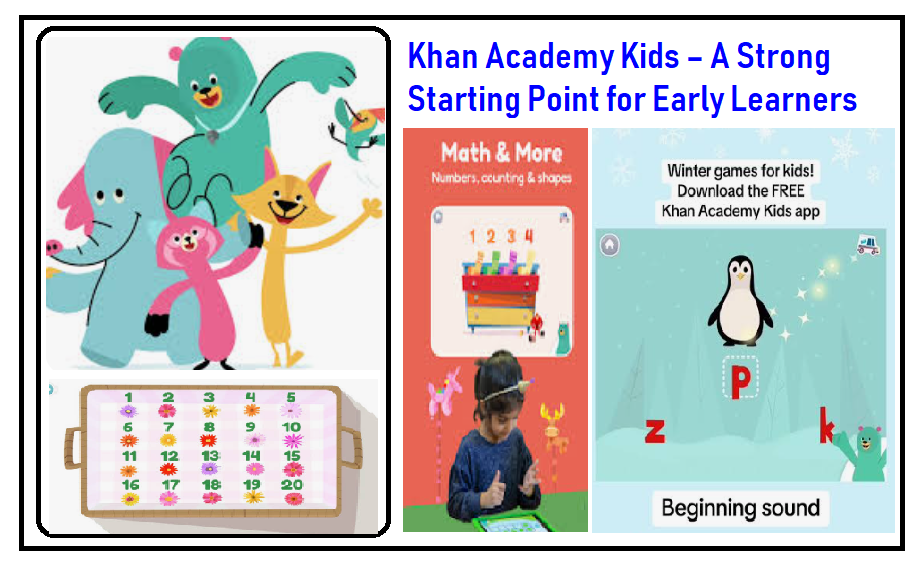
What makes this type of kids’ learning game useful is the combination of academic practice and exploration. A child can move between early phonics, numbers, stories and creative activities instead of spending an entire session answering the same type of question. Khan Academy Kids also uses adaptive learning paths, allowing activities to change according to the child’s progress. For parents searching for free educational games for kids, this makes it particularly practical for home learning.
2. Prodigy Math Game – Mathematics Hidden Inside an Adventure
Many children know they are doing mathematics when they open a worksheet. Prodigy takes another route by placing mathematical questions inside a game world. Children answer problems while progressing through an adventure, making the academic task part of the game rather than a separate activity.
According to Prodigy’s current curriculum information, its math game includes more than 1,500 mathematical skills aligned with curriculum standards for Grades 1 through 8, with content adapting to a student’s progress.
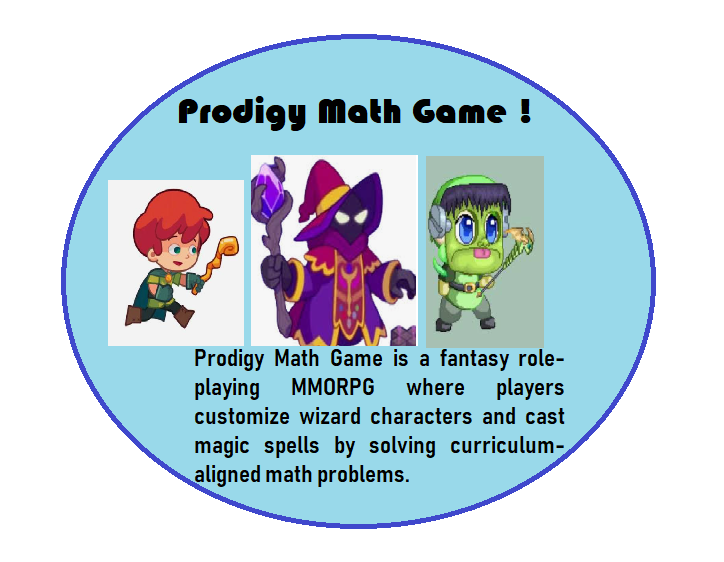
This makes Prodigy particularly interesting for parents looking for math games for kids who become bored with repetitive arithmetic practice. The important idea is not simply that the game contains mathematics; the mathematics is connected to progression. Children have a reason to solve the problem because their answer affects what happens next in the game. That connection can make routine practice feel more like a challenge than homework.
3. Minecraft Education – Learning Through Building and Experimentation
Minecraft is usually associated with construction and exploration, but its educational version turns those same mechanics into structured learning experiences. Minecraft Education provides lessons and activities covering areas such as STEM, coding, history, language arts, social-emotional learning and digital skills. Its current platform includes hundreds of standards-aligned lessons and tools designed specifically for educational environments.
The educational value comes from the freedom to build and experiment. A student might construct a model, investigate a scientific concept, collaborate on a project or learn programming through an interactive environment.
Minecraft Education also currently includes computer-science resources involving coding, AI literacy and digital citizenship. Its GameCode curriculum goes further by having students design arcade-style games inside Minecraft while learning programming concepts.
For older children, this makes Minecraft Education one of the more interesting STEM games for kids, particularly when an adult or teacher gives the activity a clear learning objective.
4. ScratchJr – A First Step Into Coding
Coding does not have to begin with a complicated programming language. ScratchJr introduces young children to programming through visual blocks that can be arranged to control characters and create interactive stories or games.
The platform is designed for children around five to seven years old. Its creators describe activities involving problem-solving, project design, creative expression and social-emotional development.
The clever part of a coding game for kids like ScratchJr is that children can see the consequences of their instructions immediately. If a character moves in the wrong direction, the child can change the sequence and try again.
That creates an early understanding of cause and effect, sequencing and debugging without requiring the child to understand conventional programming syntax.
5. DragonBox – Making Mathematics Feel Like a Puzzle
DragonBox approaches mathematics from a game-design perspective rather than simply turning textbook questions into digital quizzes. Its collection includes games for number understanding, arithmetic and algebra. One of its algebra experiences introduces children to the process of solving basic linear equations through an interactive game environment.
The company’s current product range also includes activities for numbers, larger-number operations and multiplication.
This style of educational math game can be particularly useful because the child is encouraged to discover mathematical relationships through manipulation and problem-solving. Instead of immediately presenting algebra as a collection of symbols and rules, the game gradually develops the idea that an equation can be transformed while preserving its meaning.
6. PBS KIDS Games – Learning Through Familiar Stories
PBS KIDS Games provides a collection of games connected to children’s educational television characters and themes. Its strength is variety: rather than focusing exclusively on one academic subject, children can encounter games involving mathematics, literacy, science, creativity and problem-solving.
For younger children, familiarity can make a significant difference. A child who already recognises a character may be more willing to explore a new activity involving counting, reading or logical thinking. This illustrates an important principle for educational games for children: learning does not necessarily have to look academic to be useful. A carefully designed puzzle or story-based activity can encourage children to practise skills without making every activity feel like a lesson.
7. Osmo – Connecting Physical Play With Digital Learning
Osmo takes a different approach by combining a tablet with physical objects. Depending on the activity, children may use cards, letters, numbers, drawing tools or other physical pieces while the digital system responds to what they are doing.
This combination is valuable because it moves some of the learning activity away from the screen. Instead of simply tapping an answer, children may manipulate objects, draw something or construct a solution before seeing the digital result. That makes Osmo an interesting choice for families searching for interactive educational games for kids who benefit from hands-on activities.
The broader idea is worth remembering when choosing a learning game: digital technology does not have to replace physical play. The strongest experiences can sometimes connect the two.
8. Duolingo ABC – Turning Early Reading Into Short Challenges
Learning to read involves many small skills, including recognising letters, understanding sounds, building vocabulary and eventually connecting those skills to words and sentences. Duolingo ABC uses short interactive activities to introduce young learners to early literacy.
This type of reading game for kids can be useful when a child needs repeated exposure to basic language patterns but does not want to sit through a conventional reading lesson. Short activities also make it easier for parents to introduce learning in small sessions rather than expecting a young child to concentrate for a long period.
For families using several educational apps, literacy games such as this can complement mathematics and creative activities rather than becoming the child’s entire digital routine.
9. Code.org – Game-Based Introduction to Computer Science
As children become older, educational games can move beyond basic arithmetic and reading toward computational thinking. Code.org provides interactive computer-science activities in which learners work with programming concepts, puzzles and projects.
Coding games are valuable because programming is fundamentally based on problem-solving. A child creates instructions, observes what happens, identifies an error and modifies the instructions. That cycle resembles the way children solve many other problems outside computing.
For parents looking for coding games for kids, the most useful feature is therefore not simply learning how to write code. It is developing the habit of breaking a larger problem into smaller steps and testing possible solutions.
10. LEGO-Based Digital and STEM Games – Learning by Designing
LEGO-inspired educational activities occupy an interesting space between construction, engineering and creative problem-solving. Whether children are designing structures physically or using digital environments, the basic process is similar: create something, test it, discover a weakness and modify the design.
This makes construction-based activities particularly relevant to STEM education for children. A child building a bridge, vehicle or automated structure is naturally exposed to ideas involving balance, geometry, sequencing, cause and effect and systems thinking. These activities can also provide an easy transition from play into more formal science and engineering concepts.
Why Educational Games Can Be More Effective Than Traditional Practice
The attraction of educational games is not simply that children enjoy them. Play creates an environment in which children can experiment without every mistake feeling like a failure. Harvard’s Project Zero describes play as central to how children learn, including how they test ideas, explore relationships and make sense of the world.
Digital games can add another layer to this process because they can immediately respond to a child’s actions. A wrong answer can produce another attempt, a difficult puzzle can become progressively more complex, and a successful solution can unlock another challenge. UNICEF’s research similarly emphasises that well-designed digital play can support children’s sense of agency, mastery, creativity, exploration and learning.
However, calling something an “educational game” does not automatically make it educational. A game can contain bright graphics and reward systems while providing very little meaningful practice. Parents and teachers should therefore look beyond the label and ask what the child actually has to think about while playing.
How Parents Can Choose the Right Educational Game
Age is one of the first things to consider when selecting a learning game for children. A five-year-old who is still developing letter recognition needs a very different experience from a ten-year-old learning fractions or programming. Difficulty should also increase gradually. If a child succeeds without thinking, the game may be too easy; if every attempt ends in frustration, it may be too difficult.
The learning objective matters just as much. Parents searching for maths educational games should look for genuine mathematical reasoning rather than games that simply place arithmetic questions between unrelated activities. Similarly, a coding game should require children to construct sequences, solve problems or debug instructions rather than merely watching programming-themed animations.
Parents should also pay attention to advertising, purchases, privacy and communication features. A child-friendly interface is useful, but it should not encourage endless engagement at the expense of sleep, exercise, family interaction or offline play. UNICEF notes that digital games can provide positive experiences but also emphasises that different games support children differently depending on their design.
Educational Games Should Not Replace Real-World Play
The goal of educational games for kids in 2026 should not be to turn every minute of childhood into screen-based studying. Digital games work best when they become one component of a broader learning environment.
A child might play a mathematics game and then use those mathematical ideas while cooking. They might learn coding concepts digitally and then build something with blocks. They might encounter a science concept in Minecraft and later investigate the same idea using a real experiment. This combination makes digital learning more meaningful because the child begins to connect information from the screen with the physical world.
Harvard Health also emphasises that play supports skills such as executive function, emotional regulation and physical development, reminding parents that devices cannot provide every form of learning children need.
Final Thoughts on the Best Educational Games for Kids in 2026
The best educational games for kids in 2026 are not necessarily the ones with the most animations, rewards or complicated technology. Their real value comes from what children are required to do while playing. Khan Academy Kids can introduce younger learners to literacy and mathematics, Prodigy turns mathematics into an adventure, Minecraft Education transforms building into a learning environment, ScratchJr introduces programming through storytelling, and DragonBox uses puzzles to develop mathematical thinking. Other platforms extend learning into reading, science, creativity and STEM.
The biggest opportunity for parents and teachers is to stop viewing learning and play as opposites. When a game makes a child curious enough to investigate, persistent enough to try again and creative enough to find another solution, the activity can become more than entertainment. It becomes a different pathway into learning.
For that reason, choosing an educational game should begin with one simple question: What skill will my child actually practise while playing? If the answer is clear, the game has a much better chance of becoming meaningful screen time rather than simply more screen time.
Frequently Asked Questions About Educational Games for Kids
What are the best educational games for kids in 2026?
There is no single game that is ideal for every child because age, interests and learning needs differ. Popular choices include Khan Academy Kids for early learning, Prodigy Math for mathematics, Minecraft Education for cross-curricular and STEM activities, ScratchJr for beginner coding and DragonBox for mathematical thinking.
Are educational games actually useful for children?
Well-designed games can support learning, creativity, problem-solving and other developmental experiences. Research from UNICEF indicates that the design of the digital game matters considerably, so parents should evaluate what children are actually doing during gameplay rather than assuming that every game marketed as educational provides the same benefits.
What are some free educational games for kids?
Khan Academy Kids is currently free for families, with no advertisements or subscriptions in the children’s app. ScratchJr is also designed as a free introductory coding platform for young children. Availability and features can change over time, so parents should check the official service before installing an app.
Which educational games are good for mathematics?
Prodigy Math and DragonBox are two examples of games that make mathematics part of gameplay. Prodigy currently covers more than 1,500 mathematical skills aligned with Grades 1–8, while DragonBox offers experiences ranging from early number concepts to algebra.
Can educational games teach coding?
Yes. ScratchJr introduces programming to young children through visual blocks, while Minecraft Education offers coding activities and its GameCode curriculum. These approaches allow children to learn concepts such as sequencing, algorithms, problem-solving and debugging through interactive activities.
Should parents allow children to play educational games every day?
Educational games can be part of a child’s routine, but they should complement rather than replace sleep, physical activity, reading, creative offline play and interaction with family and other children. The quality and purpose of the activity are more important than simply labelling screen time as “educational”.